Rukun Tetangga
The events of 13 May 1969 marked one of the most difficult chapters in Malaysia's history. The tragedy exposed deep social divisions and challenged the foundations of national unity, reminding the nation that harmony could never be taken for granted.
As Malaysia worked towards healing and reconciliation, Tun Abdul Razak recognised that rebuilding the nation required more than economic development and political stability. It required trust between communities and stronger bonds among ordinary Malaysians.
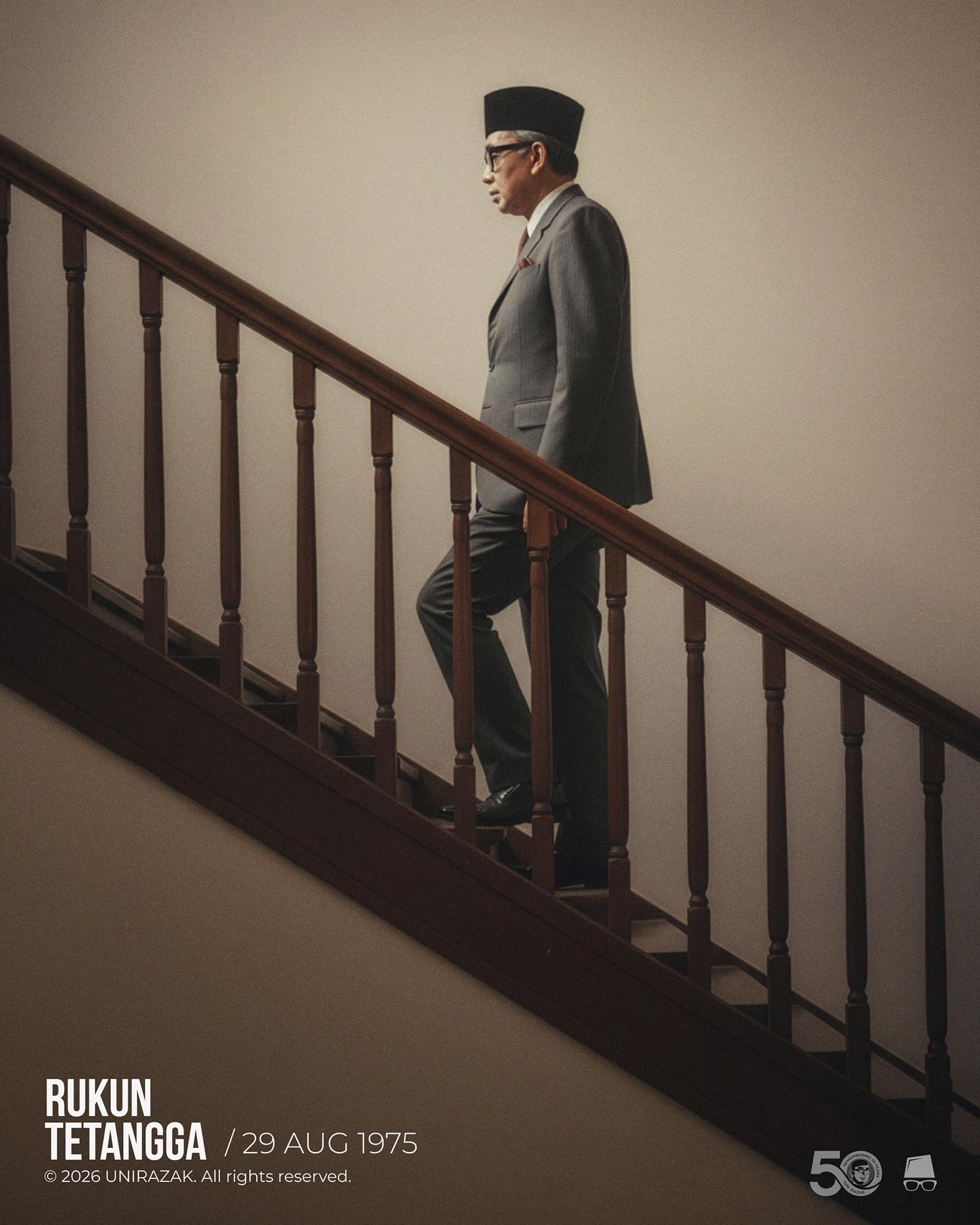
On 29 August 1975, the Rukun Tetangga programme was introduced to encourage neighbours to work together in safeguarding the well-being of their communities. Initially established as a neighbourhood watch initiative, it soon evolved into a platform that brought people of different backgrounds together through cooperation, mutual respect, and shared responsibility.
For Tun Abdul Razak, unity was not built solely in Parliament or government offices. It was nurtured in neighbourhoods, where people met, interacted, and learned to understand one another. Through Rukun Tetangga, he sought to strengthen the spirit of community that would help unite Malaysians beyond differences of race, religion, and culture.
More than a community programme, Rukun Tetangga became part of a larger national effort to build a peaceful and cohesive society. It reflected Tun Abdul Razak's conviction that the strength of a nation begins with the strength of its communities.